About Pete Maher | Audio Mastering for IndIE Artists
The Early Days: Squats & Songwriting
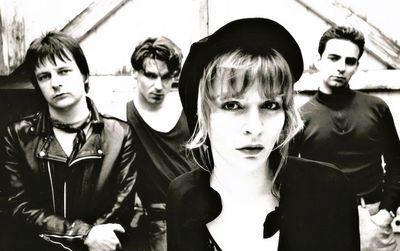
I didn’t start out as a mastering engineer. I entered the music world as a young guitarist and songwriter, living in squats and squalor in Brixton and Shepherd's Bush, London. During those early years, I signed indie deals with Native Records, Rough Trade, Skyclad NY, and Red Bus Music, followed by a long-term publishing deal with Warner Chappell Music.
As a member of Emma Vine and The Emotionals, I tasted moderate success—especially in the US, where we earned decent radio play and college hits. We were even adopted by the legendary DJ Rodney Bingenheimer on KROQ Los Angeles, and I actually wrote his iconic station ID: “Rodney on the ROQ.”
Learning from the Legends
While chasing my own dreams, I also worked as a studio assistant and live sound engineer. I handled live sessions and studio work for Coldplay, Keane, Razorlight, The Darkness, Bob Geldof, Boney M, The Buzzcocks, Sheryl Crow, and Annie Lennox.
From the chaotic live energy of the Dublin Castle in Camden Town to the more refined sessions at the BBC, I learned exactly how this industry works.
The Birth of Pete Maher Mastering
In 2004, I launched Pete Maher Mastering to cater for independent musicians and friends. At the time, I was also working at Backstreet Studios on Holloway Road in Islington. We ran eight studios with three sessions a day, meaning up to 24 bands passed through our doors every 24 hours. I used that opportunity to reach out and offer every single band a free master. It didn’t take long for the word to spread: Pete Maher is the master of mastering.
Pete Maher - A Pioneer of Online Mastering
I was the first mastering engineer in London to offer online mastering (Feb 2004).
Back then, social media was in a good place. Not riddled with ads and nonsense. I became a "MySpace Warrior," working through the A-Z of bands to introduce myself. That connected me with the Manchester EDM scene where I became the in-house mastering engineer for Rumour Records and Klone Records. Suddenly, I was mastering EDM projects for Pumpin UK Records, Energise Records, BMG, and Ministry of Sound.
Finding the Sonic Sweet Spot
My trajectory changed forever when I was introduced to funk label Freestyle Records and began remastering the legendary King Tubby back catalogue for Acid Jazz Records.
These projects demanded a radically different approach. Instead of the brickwall, "get it banging" style of EDM, these artists wanted masters that were powerfully loud yet dynamically tight. It was a game changer. To handle this, I delved deep into the world of multiband compression. This is where I found the Pete Maher sonic sweet spot.
The Blind Test That Changed Everything
As I kept networking, I hooked up with the renowned 140dB Management. They offered me a deal and immediately threw my name into the ring with U2, who were looking for a new mastering engineer for their 360° World Tour projects. I was asked to supply a sample master, but I was up against the very best mastering engineers in the world. My manager told me not to get my hopes up—they just wanted to put my name forward to help promote me. But U2 did a blind test, listening to samples without knowing who made them. No corporate bias and no industry politics. They chose my master.
Suddenly, I was mastering for Maximo Park, Charlie Simpson, Alesha Dixon, Toploader, and Shane MacGowan. Soon after, I mastered U2’s massive supergroup album featuring tracks by The Killers, Nine Inch Nails, Depeche Mode, Jack White, and Snow Patrol.
After hearing my master of "Love Is Blindness," Jack White’s manager called me directly. She told me that she and Jack were completely blown away—they didn't expect it to sound so massive. That track went on to become Jack’s hit single and was featured in The Great Gatsby film. In total, I went on to master over 50 U2 tracks spanning across two albums, a Nelson Mandela documentary, a Super Bowl commercial and an acoustic single.
Choosing the Musician Over Major Record Labels
With that level of success, 140dB Management wanted me to become exclusive. They wanted me to run their mastering house at the Chapel, focusing solely on major labels at £75+ per master. Then came the ultimatum: they told me to stop working with small labels and unsigned artists at lower rates. They told me, "Pete, if they really want you, they will cough it up"
I didn’t like that. So I suggested that they handle my major label projects while I continue looking after my independent clients. They wouldn't accept that, so I had to walk away. It was a deal breaker for me. They warned me that I would never work with big names again. But within three months, I was mastering projects for Liam Gallagher, The Rolling Stones, and U2. The rest is history...
Why Remaining Independent Wins.
For me, walking away from 140dB was the right decision. I'm not into being Mr Exclusive. I don't chase the big names (despite my track record) or seek corporate success. I have been offered top positions at several mainstream mastering houses, but it's not for me. I'm a proud independent. A musician at heart. I do this because I love music. Is there any other reason to do it?